
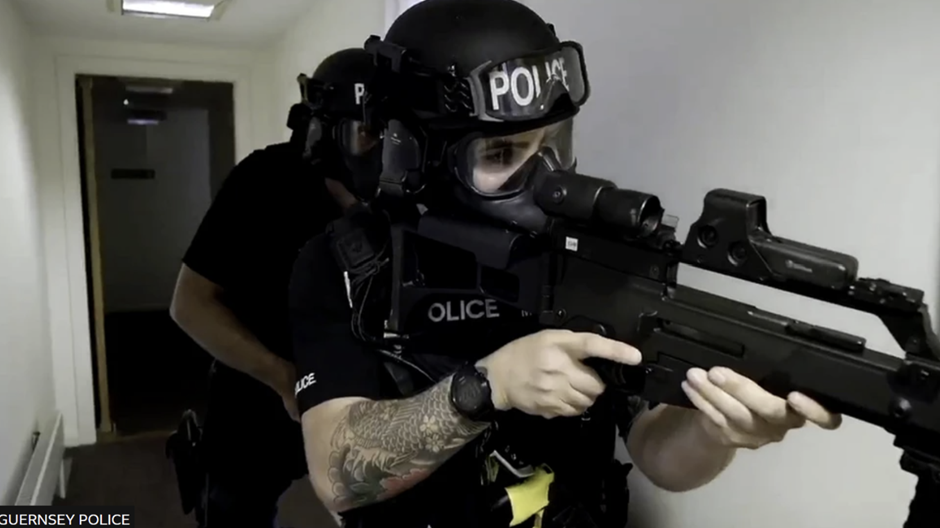
What are the requirements for joining law enforcement? At first blush, not that many.
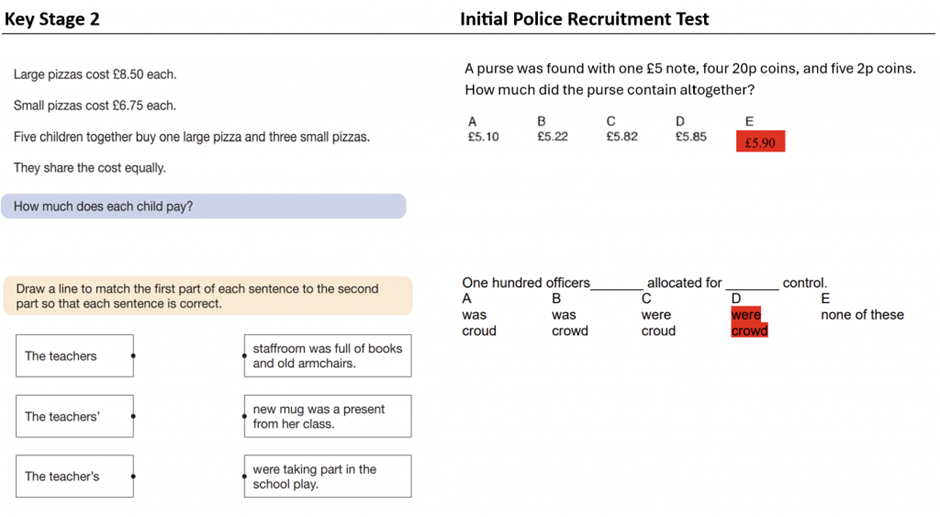
“Previous criminal convictions,” reads the Guernsey police recruitment ad, “… will not necessarily prevent appointment”. Education? Not needed. However, you are required to pass the Initial Police Recruitment Test. I recognised the format from my son’s old Key Stage 2 tests (7-11 year olds). Here’s a comparison:
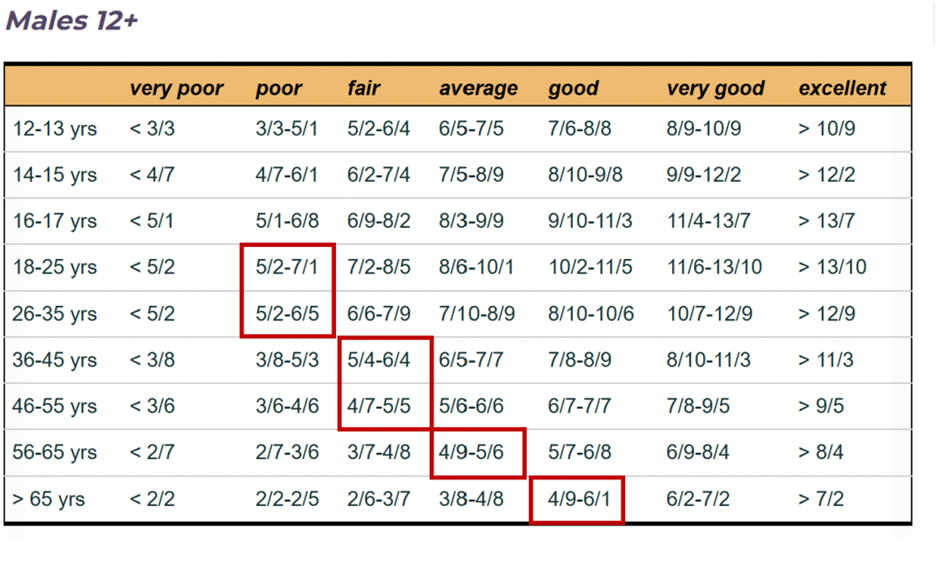
Fitness? Guernsey police say potential candidates “will be required to complete the rigorous and physically demanding selection process”. But is this accurate? Measured using the shuttle run test (otherwise know as the Bleep Test), a pass level is 5.4—well below average for anyone but males aged 56 and above (see table below). Surprisingly then, Guernsey police admit that meeting sub-par fitness standards “causes the most concern for many potential recruits”. To put that into perspective, Guernsey firefighters must reach a score of 9.6 to pass. Potential paramedics, too, are subject to far more stringent physical tests than law enforcement.
Along with average eyesight, that’s all that’s needed to join the Guernsey police. So what are the benefits?
According to the Guernsey Press, “wages vary from £38,877 to £54,445 a year.” Whereas starting salary for police constables in E&W is £21,402, rising to £41,130 at the top of the scale (achievable after about seven years). That it is to say, the lowest paid constable here earns nearly as much as a seasoned officer over there.
Compare this to nurses—a job which requires a degree (or equivalent)—who are paid a starting yearly wage of £25,537 [since 1 January 2025]. That’s £13 per hour. Minimum wage currently sits at £12 p/h, rising to £13 p/h this October.
Due to chronic understaffing, police officers habitually face oodles of overtime. And in 2023 alone, £620k (2022: £604k) came out of civic coffers to pay for it. Police annual accounts state that there were 139 officers employed for the year. Loosely speaking, that’s an extra of £4,460 per officer. And let us not forget the 2023 ‘retention bonus’ of £5k a head.
A loose tally puts starting pay anywhere between £39k to £50k p/a (overtime dependant). But that’s not all. Part of the package includes medical cover, consideration towards contributing to officers’ “necessary dental and optician charges”, and a very generous State pension.
Officers also benefit from unlimited, free legal counsel of their choice. Over a two year period, ending February last year, the Guernsey taxpayer shelled out an additional £400,000 or more towards four officers’ legal fees, including ex-Chief Officer Ruari Hardy. Too boot, one of the officers “fled” the island half way through litigation, only to be relocated—with his partner—in the Caribbean, courtesy of the local taxpayer, while still having his legal fees covered… by the local taxpayer.
As an aside, ex-Chief Officer Ruari Hardy threatened to slap the Bailiwick Express with a defamation suit in 2022; over an article that stated two (proven at the time of going to print) facts about him that he didn’t like. In the event Hardy went ahead with his threat, would associated costs come out of his pocket; or yours?
After just four months of class-room training, officers are officially sworn in at the Royal Court. Following three months of supervised patrolling, they’re on their own. After a two-year probationary period, officers are then appointed to the rank of constable.
This raises serious questions about the quality of candidates and value for taxpayers’ money; especially with perks such as unlimited legal support. For comparison, professions such as nursing demand more qualifications for far less pay, while Guernsey police offers a lucrative package with exceedingly low entry requirements.