
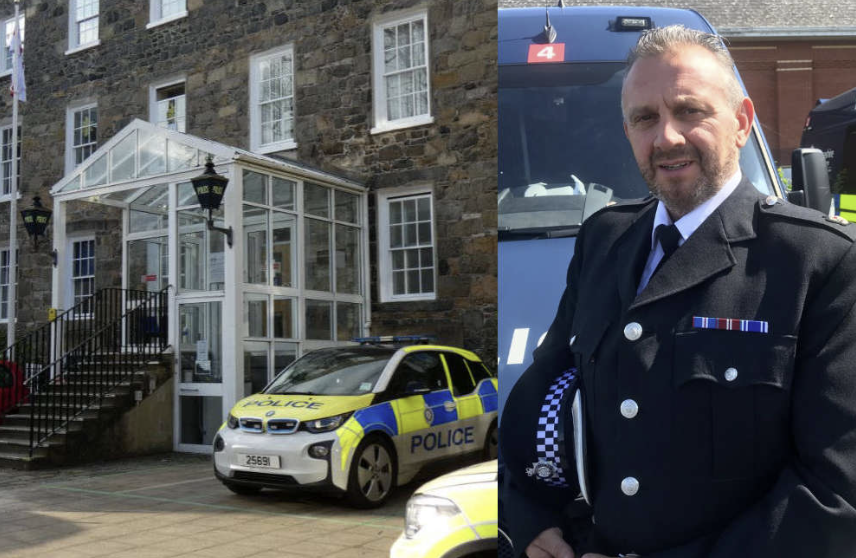
“Ah,” said Deputy Gollop, peering at me. “You’re the guy who wrote about me. You said you wouldn’t vote for me unless you had no other choice.” I was caught off guard by his choice of opener, especially since it was the first time we’d met. “Er…” I mumbled, hoping the Chief Officer would come back.
But Gollop wasn’t the main event. He had turned up for the first community meeting organised by Damian Kitchen, Guernsey’s new Chief Officer*. In fact, it was possibly the first time the force had voluntarily stepped into the line of fire for an open debate.
When Kitchen took the floor, he did so without notes, relying on neither a teleprompter nor his communications team. He didn’t sugarcoat the results of the survey he’d commissioned, although one of his staff mentioned they couldn’t release the raw data—something I found odd. After finishing, he opened the floor for questions.
The passion in the room was palpable. Cycling and road issues dominated early discussions, tyres and tempers clearly a real concern. But when talk turned to violence against women and girls (‘VAWG’), the mood shifted. Some attendees quietly left. One woman, Ms. A, later told me she’d nearly wept when an officer from the Public Protection Unit spoke about how seriously they take VAWG.
Ms. A had endured physical and emotional abuse—strangling, harassment, a flood of abusive messages—and worse. Yet, Guernsey Police had failed her. So badly, in fact, it deserves an article of its own. Ms. A confided in me that she wished she’d been brave enough to confront Kitchen about how officers actually treat female victims. I told her that showing up was bravery enough.
Deputy Chief Officer Philip Breban, with 43 years of Guernsey policing under his belt, was there. Offered a seat facing the audience, Breban refused, literally turning his back on the crowd. He didn’t linger after the meeting either, disappearing quickly into the background.
When community policing came up, a man sitting beside me spoke up. “We need more officers like PC Nick,” he said, nodding towards a uniformed man across the aisle. “The kids love him at the schools. He’s amazing.” A round of applause followed. PC Nick, clearly embarrassed, looked down at his shoes, unsure of how to react to the heartfelt praise heaped upon him. Kitchen smiled, “If I take one thing from this meeting, it’s that we need more PC Nicks!” he said, receiving a salvo of laughter back.
When the conversation shifted to professional standards, I voiced my concerns. Kitchen initially fielded my questions, but after a while, DCO Bell took over. After the meeting, as I was slipping on my cardigan, ready to go, I noticed Bell making a beeline for me. Curious, I stayed put. And I’m glad I did: we ended up having a meaningful conversation. Bell acknowledged the community’s concerns and, on the surface, seems committed to addressing them.
Kitchen also made a point of speaking to me. He, too, left a strong impression. While Bell was more measured with his words, Kitchen was direct and, at times, refreshingly blunt. Of course, some may view this as performative—and they might be right.
Kitchen asks for trust, both mine and yours. But trust, in my view, is earned, not freely handed out. And while you may not have heard about it, Kitchen has been working hard behind the scenes. Though he was very tight-lipped about the specifics, Guernsey, as small as it is, means word gets around. I found out what he’d been up to via other means.
For what it’s worth, I’m inclined to trust Kitchen. Yet it’s not his intentions that matter—it’s his ability to deliver. Fresh from the mainland, Kitchen has inherited a police force with a deeply ingrained toxic culture. You can change the rules in which a force operates, you can change legislation, appoint new Chiefs, change discipline arrangements, but Guernsey has never had any success in transforming its law enforcement culture.
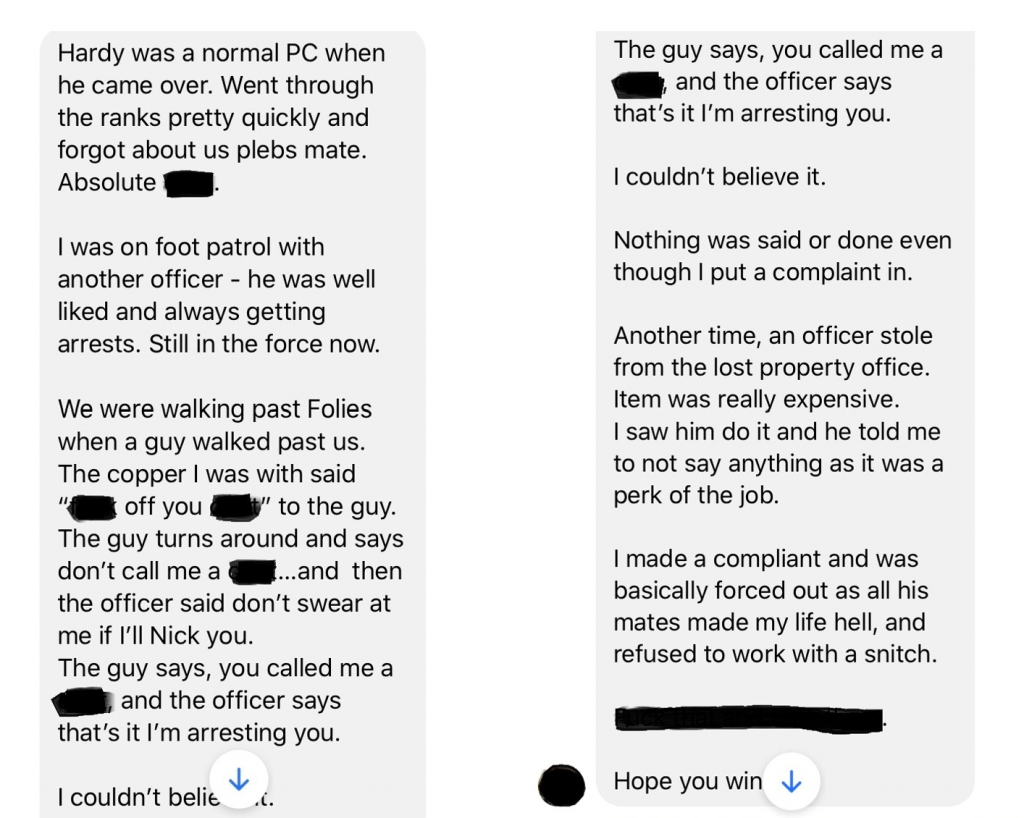
I recall an ex-Constable who, in 2022, reached out to me after my wife and I went public about suing ex-Chief Officer, Ruari Hardy, and his officers. He told me how he was passed over for promotion and forced out of the force. He had reported a fellow officer for provoking drunk revellers to up his arrest record, another for stealing from lost property. Senior officers had dismissed his concerns; junior officers had labelled him a “snitch.” In the end, he was forced to leave, while those same officers who protected the toxic status quo are now in leadership roles.
With the old guard, sitting on Home Affairs and other Committees, hopefully fading out with the upcoming general election, there’s hope the new guard can sweep away the mess they made. Guernsey’s police force isn’t just changing leaders—it’s at a crossroads. Will the old guard step aside, or stubbornly dig in? Kitchen’s intent seems solid; but his success hinges both on the old guard bowing out and in his execution.
* Sally Gillman and another lady, both standing in the upcoming election, joined the crowd. Deputy Simon Vermeulen and hopeful candidate Jayne Ozanne also attended. No other Deputies, current or hopeful, bothered turning up.