
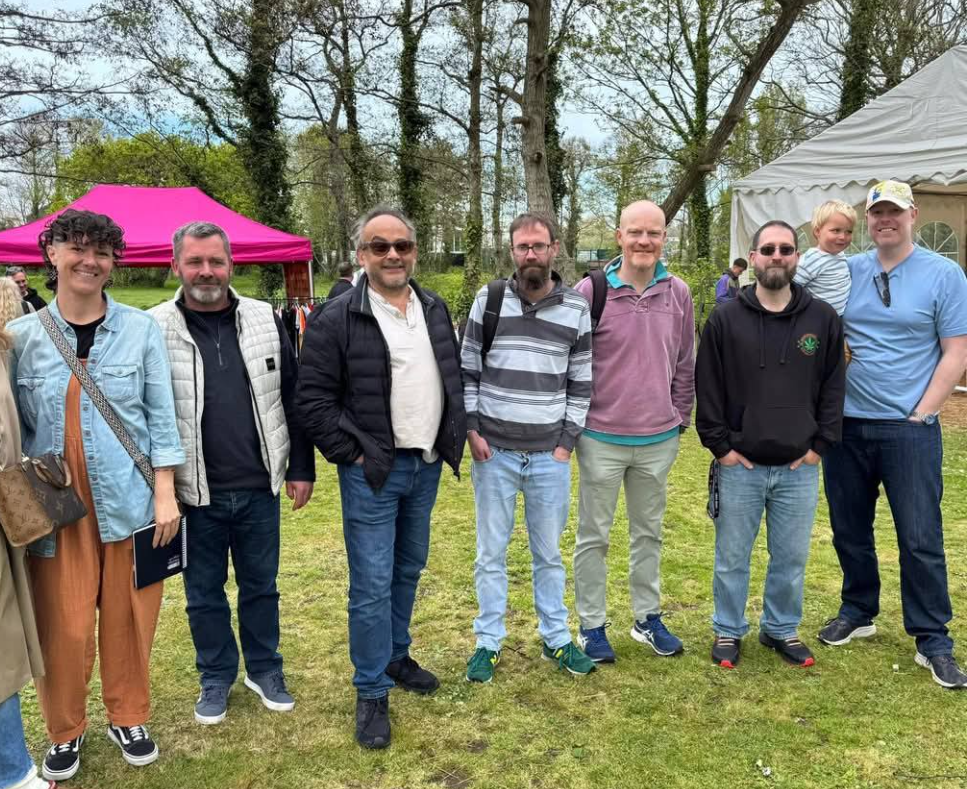
FROM LEFT TO RIGHT: DEPUTIES TINA BURY, MARC LEADBEATER, CHRIS BLIN, AIDAN MATTHEWS, GAVIN ST PIER; ORGANISER BRUCE CARUSO; AND ME
Before being reshaped by Christianity, Easter was a pagan holiday celebrating renewal and rebirth. For Christians, it celebrates the resurrection of Christ. So it was rather fitting that Guernsey’s 4/20 event, held last Saturday, left me hopeful for our island’s renewal. Amid outdated laws and political bickering, I caught a glimpse of what could be—if we dare work to embrace change.
I was honoured when Bruce Caruso, the organiser of 4/20, invited me to join the panel where participants put questions to their potential future leaders. The panel consisted of five seasoned Deputies and me, sat facing the audience (which included Deputy Carl Meerveld and 2025 candidate, Tom Rylatt).
Now, I know what you’re thinking: “Rob, it’s just electioneering.” And maybe it was, maybe you’re right. But that’s not the feeling I got.
What I saw was States Members and voters singing off the same hymn sheet. We didn’t all agree on the finer points but, overall, we were mostly in tune. And, just like that, I realised how lucky we are to live here. Where else can you casually spend time, with zero police presence, at a lovely outdoor event, mingling with half a dozen government officials (in fact, nearly an entire Committee)?
It made me reflect on something far too easily forgotten: politicians are people. Just like you and me. It’s easy to judge them, jabbing away at a keyboard, safe behind a screen. But in person, it’s very different. Chatting with Deputies Tina Bury and Aidan Matthews, for example, I saw their passion up close. Face-to-face, without fear of being misquoted, they were candid and open. Tina’s smile was borderline infectious. And that’s when it hit me: I held beliefs about them that weren’t just unfair—they were dead wrong.
I’d fallen into the trap of social media echo chambers. I’d listened to voices with grudges, misled by selective outrage. I’m not proud of that. But I’ve also learned that it is possible to break the cycle. There is an antidote: participating in real conversations, like those at 4/20.
Of courses, critics will rightly point out I’ve been outspoken about certain politicians I’ve never met—Deputy Prow, for instance. But in fairness, I have asked to meet him: directly, indirectly, through intermediaries, you name it. Each time, nothing. Silence. A granite wall.
And I’m far from the only one who’s hit that wall.
Take cannabis legislation. It’s inextricably intertwined between two principal Committees: Health & Social Care (HSC), and Home Affairs. HSC showed up to 4/20. Home Affairs? Not a single representative to be seen.
Medicinal cannabis, prescribed over 13,200 times in 2023, is a lifeline for many; yet reform stalls. HSC, backed by the likes of Bury, Matthews, and Leadbeater, has pushed for legalisation since 2022; citing evidence establishing our drug policies are failing. Recent UK Government findings confirm this: prohibition fuels crime, not solutions. But Home Affairs, led by Deputy Rob Prow, doggedly resists the facts. On the one hand Prow cites concerns about regulation, but on the other hand ignores experts like retired police officer Tom Lloyd, a key note speaker at 4/20, whose calls for reform go unheard. Showing this isn’t about cannabis—it’s about a mindset that dismisses evidence in favour of clinging to the safety of old and outdated beliefs.
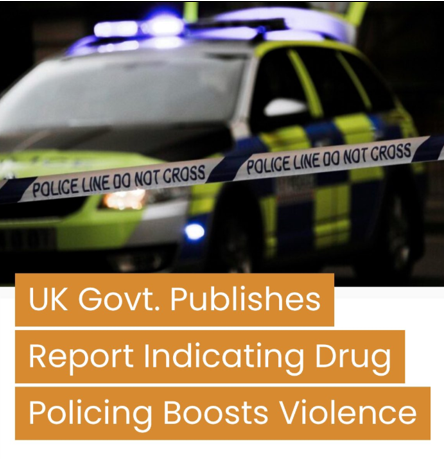
“The available evidence suggests that drug-related law enforcement activities are of limited effectiveness in reducing violence,” states the report, which was prepared by the research organization RAND Europe and published by the UK Home Office on March 27. “Indeed, more studies demonstrated an association between drug-related law enforcement activities and increased violence than decreased violence.”
The cost of this irrational attitude is real. Industry leaders warn that Guernsey’s rigid policies are driving cannabis related businesses away, costing jobs and innovation. Related policing, judicial and correctional costs are losing the taxpayer hundreds of thousands annually. Meanwhile, the UK Privy Council’s veto power over domestic laws adds a further obstacle, reminding us that Deputies must be bold and innovative in efforts to overcome systemic barriers.
A refusal to modernise has also left Guernsey with a broken and unjust legal system. Did you know that being drunk in court, touching a mooring, or thumbing through a magazine showing too much skin could land you with a £200 fine and/or three months in prison?
Don’t get me started on our appeals process. It hasn’t changed since 1907. Whereas the UK overhauled theirs in 1966, we’re still operating under laws written during the Edwardian era. Such relics burden our island, making life harder and more costly than it needs to be.
This is what happens when progress is blocked. When politicians ignore up-to-date evidence, dodge engagement, and cling to power rather than serve the people. Bad politicians make bad laws. And bad laws make for a worse life—for everyone. Which is mostly why we’re in this mess in the first place.
But there is hope. I recently caught sight of it. Six Deputies, ideologically different, working together. Candidates, not yet elected, collaborating. Members of the public showing up, offering ideas, and helping without being asked. Individuals working together for the benefit of the community. Or, to paraphrase Marcus Aurelius, “what is good for the hive is good for the bees.”
Guernsey is filled with fertile ground, both figuratively and literally, ripe for change. The seeds of renewal have already been sown. To cultivate them, we must elect leaders who listen, embrace evidence, and engage with voters. And get rid of those who don’t.
So I say: enough is enough. The old guard has had their turn; it’s time to pass the torch. Register to vote by April 30, 2025, and be careful to choose candidates who share your vision for progress. I’ve seen what’s possible when we unite. Let’s make it a reality with our votes.