

The appointment today of Hilary Pullum as HM Comptroller (HMC) and Deputy Receiver General—serving under her sister, Megan Pullum, HM Procureur (HMP) and Receiver General—has reportedly sparked “public concerns,” according to an anonymous six-page letter.
HMP is the head of the Law Officers of the Crown, with HMC serving as second in command.
Both positions carry considerable financial responsibilities, including partial or full management of the Seized Assets Fund and revenue from fines paid by Guernsey taxpayers. While estimates suggest these could total up to £25 million and £15 million respectively, exact figures have not been confirmed. In relation to the former, both HMP and HMC sit on the Board responsible for the Seized Assets Fund.
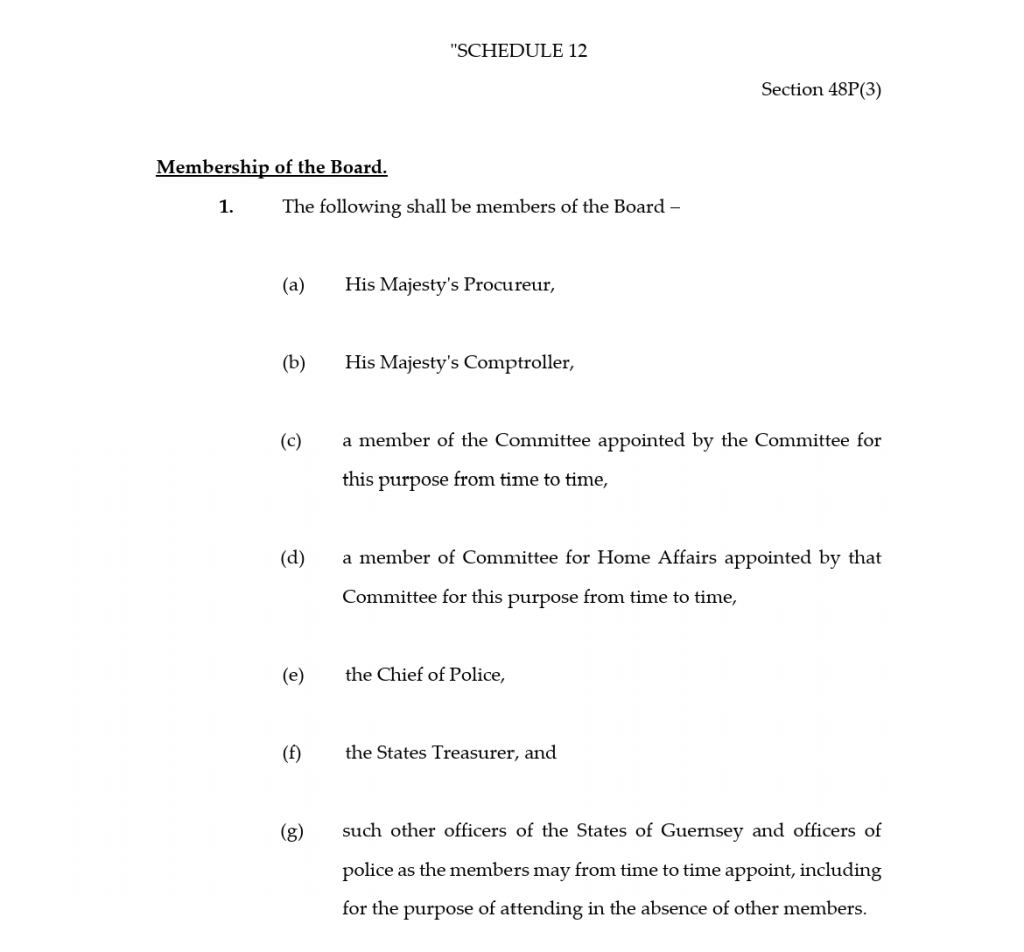
[2021] The seized asset fund was set up more than 20 years ago and currently has a balance of £15.3m.
Since the introduction, on 26 April 2024, of the Forfeiture of Assets in Civil Proceedings (Bailiwick of Guernsey) Law, 2023 there has been much debate surrounding the effect of the “reverse burden of proof” and whether HMP or HMC are released of any evidential requirements in relation to “unlawful conduct”. Simply put, in order to seize assets the Law Officers can, in effect, simply allege unlawful conduct with a “proper basis to do so”—it is up to the Defendant to prove her innocence. This gives the sisters considerable powers to seize assets, confiscated using Guernsey taxpayers’ resources, as well as ultimately deciding what to do with the bulk of the funds.
*EDIT This author today received, from HM Comptroller, the following corrections:
“It is a matter for you, but the statements you make and the inferences made are untrue; the Law Officers do not have control of the use of the seized asset funds (see legislation here CHttpHandler.ashx) and cannot, as a matter of professional obligations, raise an allegation of unlawful conduct without a proper basis to do so. Noting that I was yesterday sworn in as a Member of the States of Deliberation you may wish to reflect on how publishing such untrue information on the day I became a member accords with the Code of Conduct…”
“The comments in the anonymous letter [below] are also misconceived, as they ignore the fact that there is no inherent conflict of interest in sisters working together, there has been no conflict in the 18 years in which we have worked together, and my appointment was the result of a competitive and fair process the results of which have been heavily scrutinised externally. Others who are used to making such appointments clearly consider that I am adequately qualified for the post. That said, I accept that assuming a public role inevitably may attract public criticism from those who are not in possession of the relevant facts. It is disappointing that a Member of the States of Deliberation would choose to publish such poorly informed and unfair comment, which suggests that you endorse it.”
THE LETTER – WHICH I DO NOT ENDSORE AND DID NOT AUTHOR – HAS BEEN REPRODUCED IN FULL HERE:
As Guernsey prepares for the swearing-in of a senior public office, there is growing concern around governance standards, transparency, and constitutional safeguards. The following key issues demand urgent attention:
Key concerns
- Threat to Constitutional Independence: The appointment of siblings to the equivalent positions of Attorney General and Solicitor General – Guernsey’s top legal offices – raises serious questions about institutional autonomy and the erosion of constitutional safeguards.
- Inherent Conflict of Interest: Significant procedural irregularities in the appointment process of the Solicitor General raising ethical red flags and casting doubt on the integrity of the process.
- Unprecedented: No precedent exists for such familial concentration of power in equivalent positions, raising concerns about nepotism in government and setting a dangerous precedent.
- Public Trust and accountability: The two roles are among the highest-paid public positions in Guernsey, funded entirely by taxpayers. The opacity surrounding the appointment bypasses standard scrutiny and undermines public confidence.
- Governance Risk: These developments signal an erosion in accountability mechanisms and checks and balances critical to democratic oversight.
- Urgent Call for Accountability: An independent, transparent review is needed prior to swearing-in, to restore trust and uphold constitutional integrity
Executive Summary
A growing chorus of members of the Guernsey public has raised significant concerns over the new appointment of the junior of two Law Officers of the Crown, His Majesty’s Comptroller (HMC), announced publicly on 19 May 2025 and scheduled for formal swearing – on 26th August. At the heart of the controversy lies the involvement of the current senior Law Officer of the Crown, His Majesty’s Procureur (HMP), who, despite a personal and inherent conflict of interest, played an active role in the selection process that resulted in her sister’s appointment.
The unprecedented appointment of siblings in the two most senior Law Offices places the constitutional independence of the Law Officers in jeopardy. These roles are not ceremonial: the HMP is the Bailiwick’s equivalent of the UK’s Attorney General, and the HMC is the equivalent of the Solicitor General — both charged with advising the Crown and government on legal matters of the highest public importance. Their independence is therefore fundamental – not just to legal integrity but to public confidence in fair and impartial governance.
This has prompted deep unease within Guernsey’s legal and wider business communities, reigniting longstanding debates over institutional safeguards, the independence of constitutional roles, and the island’s global reputation. Terms like “banana republic”, “corruption” and “incestuous” are now emerging in public discourse—an alarming sign of eroding confidence in key legal appointments and the governance structures surrounding them.
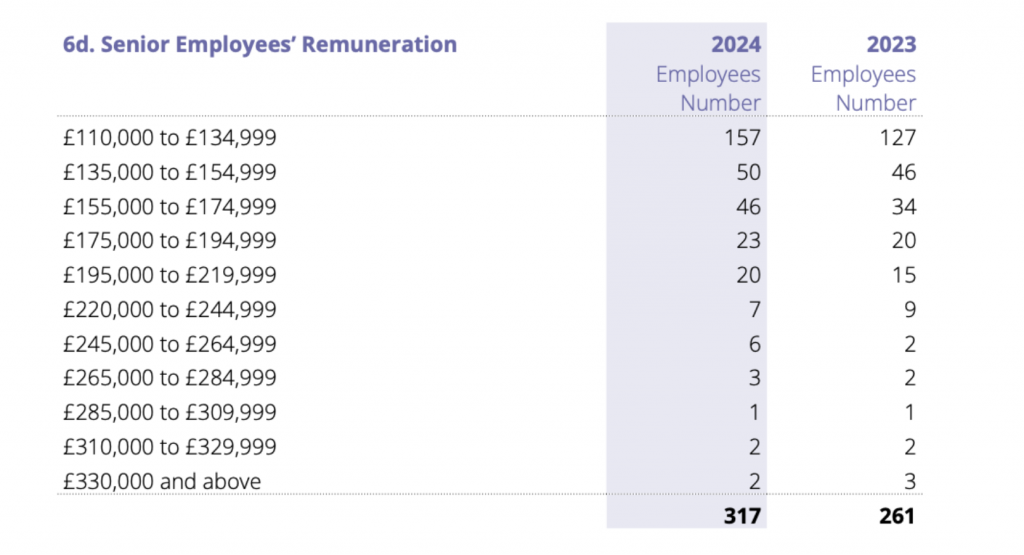
As two of Guernsey’s highest-paid public officials (with salaries funded entirely by taxpayers) the appointments to HM Procureur and HM Comptroller demand more than quiet acceptance. They call for rigorous scrutiny, uncompromising independence, integrity, and public trust.
Significance of the Independence of the Offices
The Law Officers’ own official channels reaffirm their commitment to professionalism, fairness, and ethical conduct, underscoring the expectation that these roles remain independent and free from undue influence.
Each Law Officer plays a constitutionally important and independent role in Guernsey’s legal system, affirming to safeguard the interests of the Guernsey public. The Law Officer roles are designed to be independent of one another, each carrying its own responsibilities in professionalism, ethics, fairness, and impartiality—principles that serve as key constitutional protections. The role of HMC discharges all HMP’s functions and responsibilities as a substitute.
In the case of a conflict between the interests of the Crown and Guernsey, the independence of the two Law Offices comes into sharp focus given that they are required to act on opposing sides. Independence is vital to ensure that local interests are protected, for example when those interests may diverge from those of the UK Government. Moreover, their independence is essential to uphold accountability, particularly in circumstances where one Law Officer may be required to investigate or scrutinize the conduct of the other.
The importance of the independent nature of the post was highlighted in the early 1850s when the position of HMC was suspended. The lack of a second independent Law Officer led the people of Guernsey to repeatedly petition the Crown until 1861 when finally, after a hard-fought campaign, the position was reinstated – an important reminder of its foundational status in local constitutional protections.
Concerns about familial dominance in Guernsey’s legal institutions are not new. As far back as 1815, Berry’s History of Guernsey warned of the “evident impropriety” and the “many evils” of close family ties between the Bailiff and Jurats within the Royal Court. Such warnings apply with equal force today to the current HMC and HMP appointments as senior officers to the Royal Court.
The Appointment Process and Emerging Concerns
It has come to light that the current senior Law Officer (HMP) actively participated in the appointment process leading to the recommendation of her sister’s appointment as the junior Law Officer (HMC). The only mitigation appears to have been non-participation in her sister’s interview. The formal recommendation was sent via the Lieutenant Governor to the Privy Council, although the Lieutenant Governor plays only a transmission role, not a decision-making one.
This revelation is particularly concerning given that Law Officers should meet the highest standards concerning personal conflicts of interest as lead adviser to, and member of, the States of Deliberation (Guernsey’s Parliament). The approach taken differed materially from best practice, where recusal from the process would be a standard measure to ensure transparency and accountability when a personal conflict arises.
Involvement in the process is particularly surprising given that the conflict and any mitigation applied could have been easily addressed by requesting that the current HMC, who is highly experienced in the actual role, take her place. Recourse could also have been had to HMP’s Délégué.
This concern is amplified by the fact that both roles are among Guernsey’s highest-paid public offices, funded entirely by taxpayers — a reality that demands not only procedural propriety but demonstrable independence and public trust.
Governance and Transparency in Question
This unprecedented arrangement—siblings simultaneously holding the two most senior Law Officer roles—has no known parallel in equivalent jurisdictions. In comparative legal systems, such positions are typically appointed through politically accountable processes, often subject to rigorous public and parliamentary scrutiny. In Guernsey, however, legal accountability for such appointments is restricted to mechanisms that are out of reach for ordinary citizens – such as petitions to the Crown and judicial review—none of which have thus far been mobilized. By default, only political and media avenues are immediately available to the public.
Despite repeated efforts, using what little mechanisms there are, including freedom of information requests, further details surrounding the appointment have remained inaccessible. In addition to the senior Law Officer HMP, the appointment panel included senior legal and political figures at the highest level (Bailiff, Deputy Bailiff, President of Policy & Resources, Father of the House, Senior Jurat, States of Guernsey Human Resources Officer). There is, however, no independent oversight mechanism to review or scrutinize the integrity of the process (contrary to the position in Jersey).
Concerns surrounding the appointment have reportedly been raised with the Guernsey Bar Council since June. However, it is not known what information or assurances the Bar Council may have requested or received, if any. Given the lack of transparency surrounding everything to do with this appointment to date, it is proving difficult to avoid the conclusion that rather than disclose and explain the processes and safeguards, doors are being shut; further undermining trust and confidence in the institutions.
There are also rumours that others have faced barriers in attempts to access information.
Critics are justifiably arguing that the opacity surrounding this appointment, especially in a jurisdiction as small and interconnected as Guernsey—undermines public confidence in the Island’s governance and its capacity to enforce transparency and accountability. Decisions of such gravity, particularly when they break with established norms, should not occur behind closed doors or without open explanation. Institutional safeguards as well as checks and balances designed to protect the public appear to be lacking, or more troubling, be facing deliberate obstruction.
Although some representative bodies (regulatory and newly elected) have reportedly signalled they are considering the matter, the absence of clear checks and balances — coupled with uncertainty around actionable mechanisms — continues to fuel concern. Delays persist with no clarity on whether these bodies have accessed information or are facing obstacles. With the swearing-in date rapidly approaching, time is running out.
None of these issues would likely have arisen had an independent Appointment Commission, such as Jersey’s, been in place. A body with that level of oversight would have raised and examined the serious constitutional implications of appointing two close family members to these roles, particularly in the absence of precedent, and critically assessed procedural integrity – prompting HMP’s full withdrawal due to conflict of interest having evaluated whether mitigations were appropriate, especially given the availability of another experienced Law Officer with equivalent authority.
A Call for Accountability
Considering the continued silence and lack of visible timely action from Guernsey’s institutions, members of the public are urging the media to keep the public informed and provoke discussion ahead of the swearing-in ceremony. The lack of open public discussion about siblings occupying these roles highlights the need for independent, transparent forums involving experts to review such matters before appointments are considered or made.
With the potential to set a deeply troubling precedent, and amid the apparent disregard for good governance, public law norms and the Island’s constitutional framework, the community is now calling on Deputies and other elected or appointed public officials, the States of Guernsey, the Guernsey Bar Council, and other oversight bodies to act.
Whether this appointment should go forward this month, when these broader questions of transparency, accountability, independence and public trust in Guernsey’s legal and public institutions have not been openly scrutinized and debated should now rest with a fully informed public.
Accordingly, the community is calling upon the Press to discharge its public interest obligations by bringing these matters fully into the public domain to facilitate open debate and actions.
To conclude, quoting the newly elected chair of the Scrutiny Committee, ‘transparency and sunlight are the best disinfectant’ to the continued lack of answers from all institutions now being tasked to answer valid questions. It is, therefore, manifestly in the public interest for the media to bring these matters to the attention of the public prior to the swearing-in.
* Author unknown